


Know what every model, provider, and retry actually costs.
Multi-provider LLM apps make spend opaque. One bill from OpenAI, one from your router, one from Bedrock, and no line connecting a dollar to the request, agent, or retry loop that caused it.
How FortifyRoot solves it
Attribution across every dimension
Break spend down by model, provider, service, and environment, and trace each dollar back to the request, workflow, agent, or retry loop behind it.
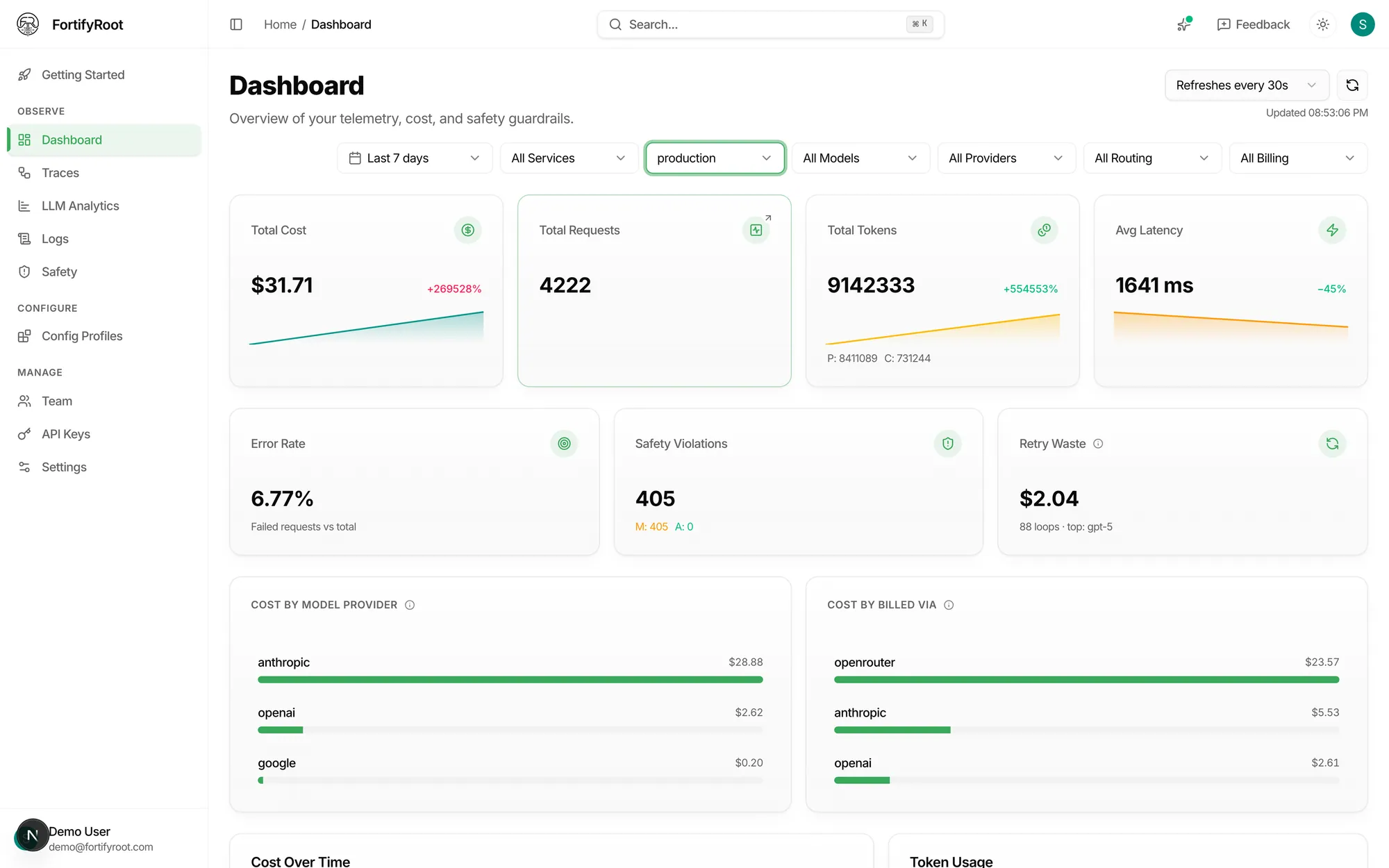
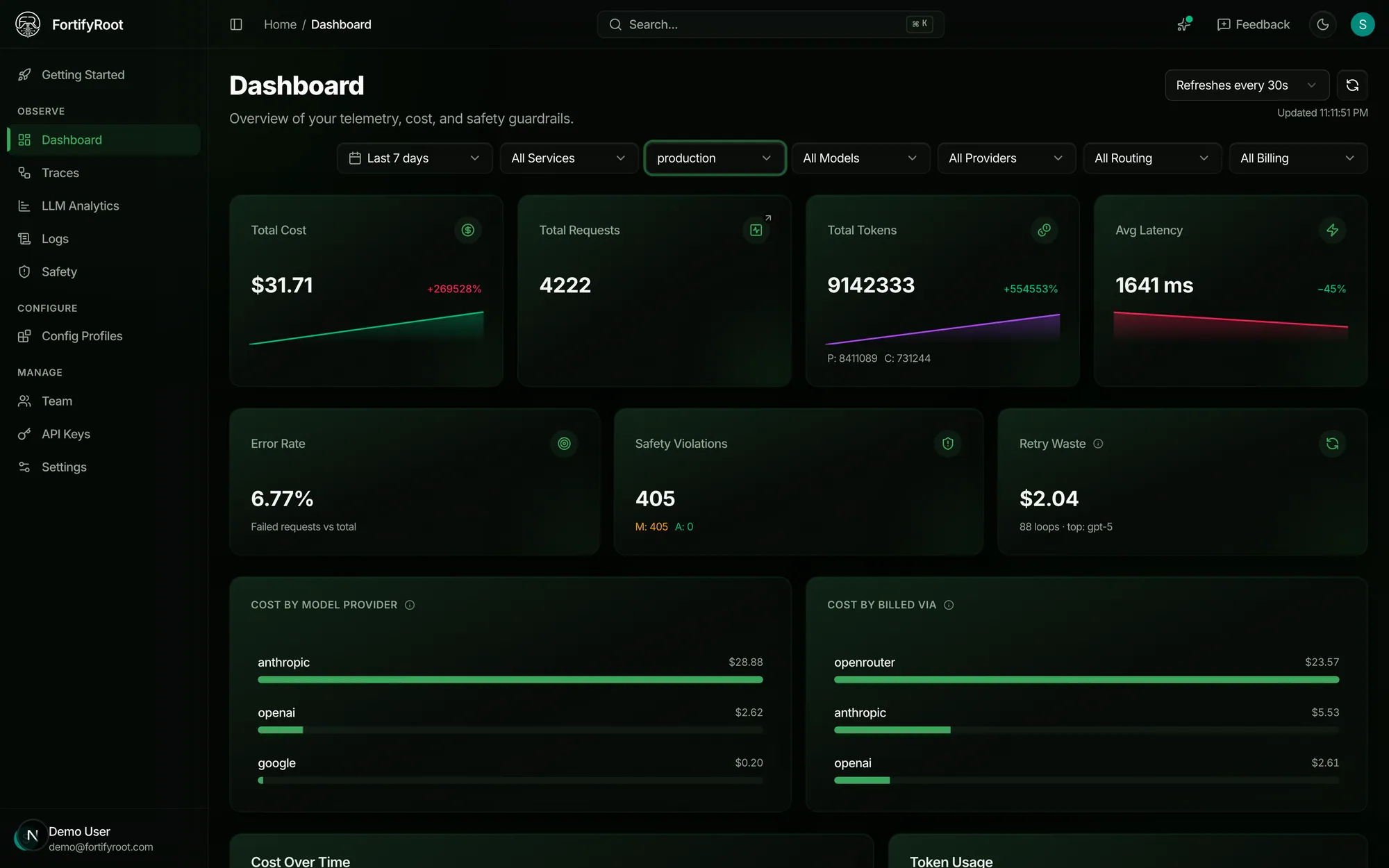
Who served vs. who billed
Provider-role normalization separates the raw SDK provider, the canonical model provider, the routing provider, and who actually billed, even behind LiteLLM or OpenRouter.
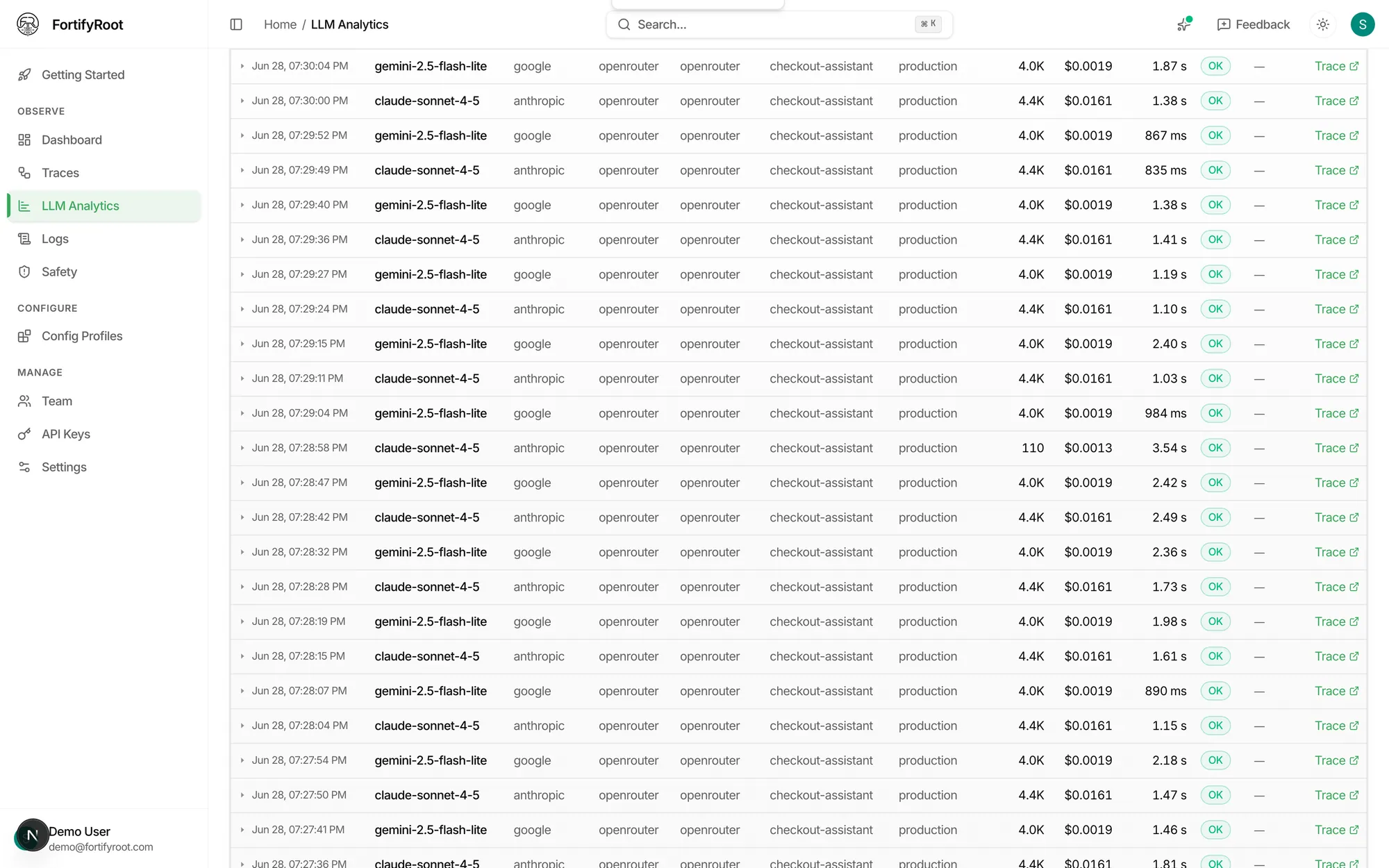
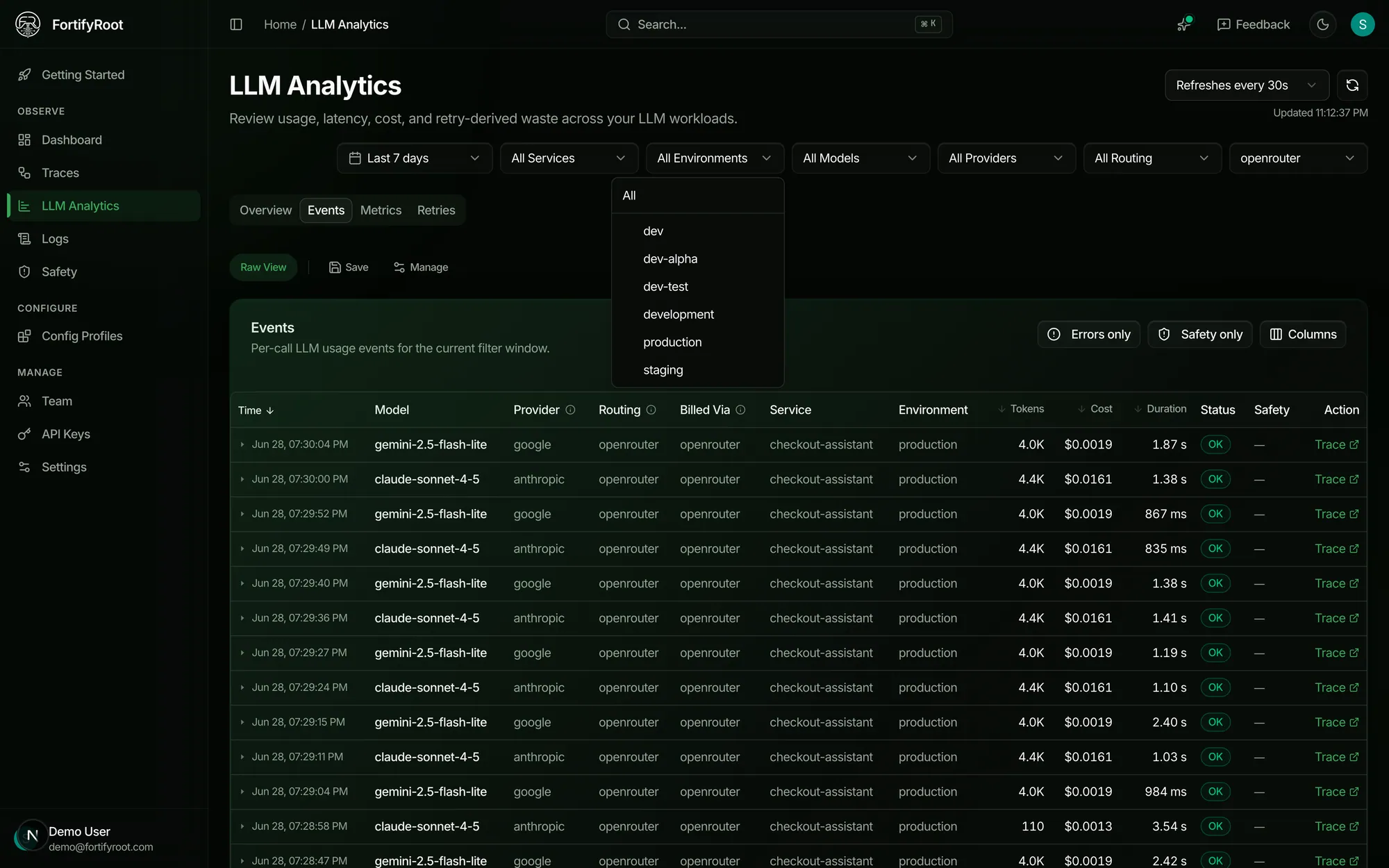
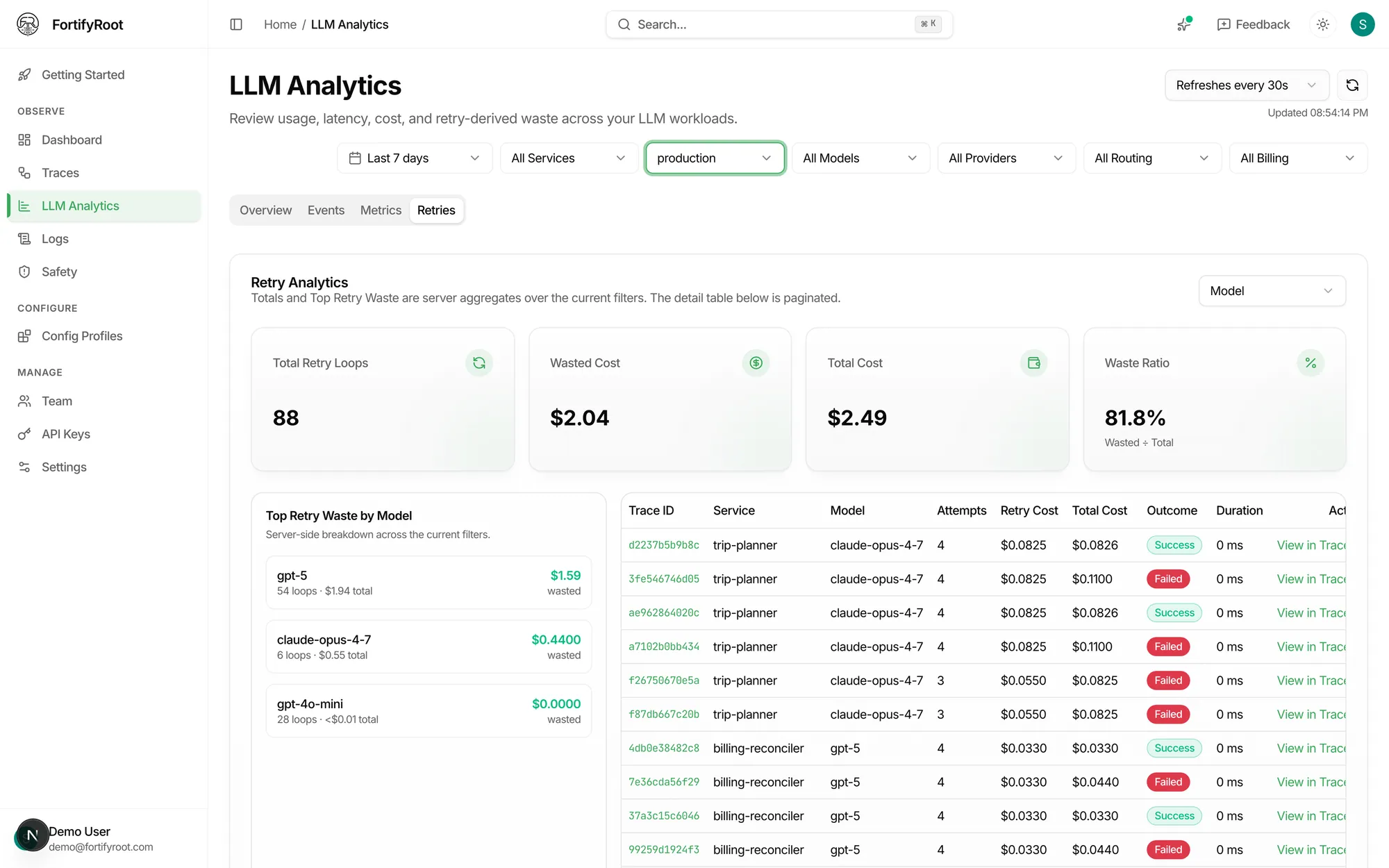
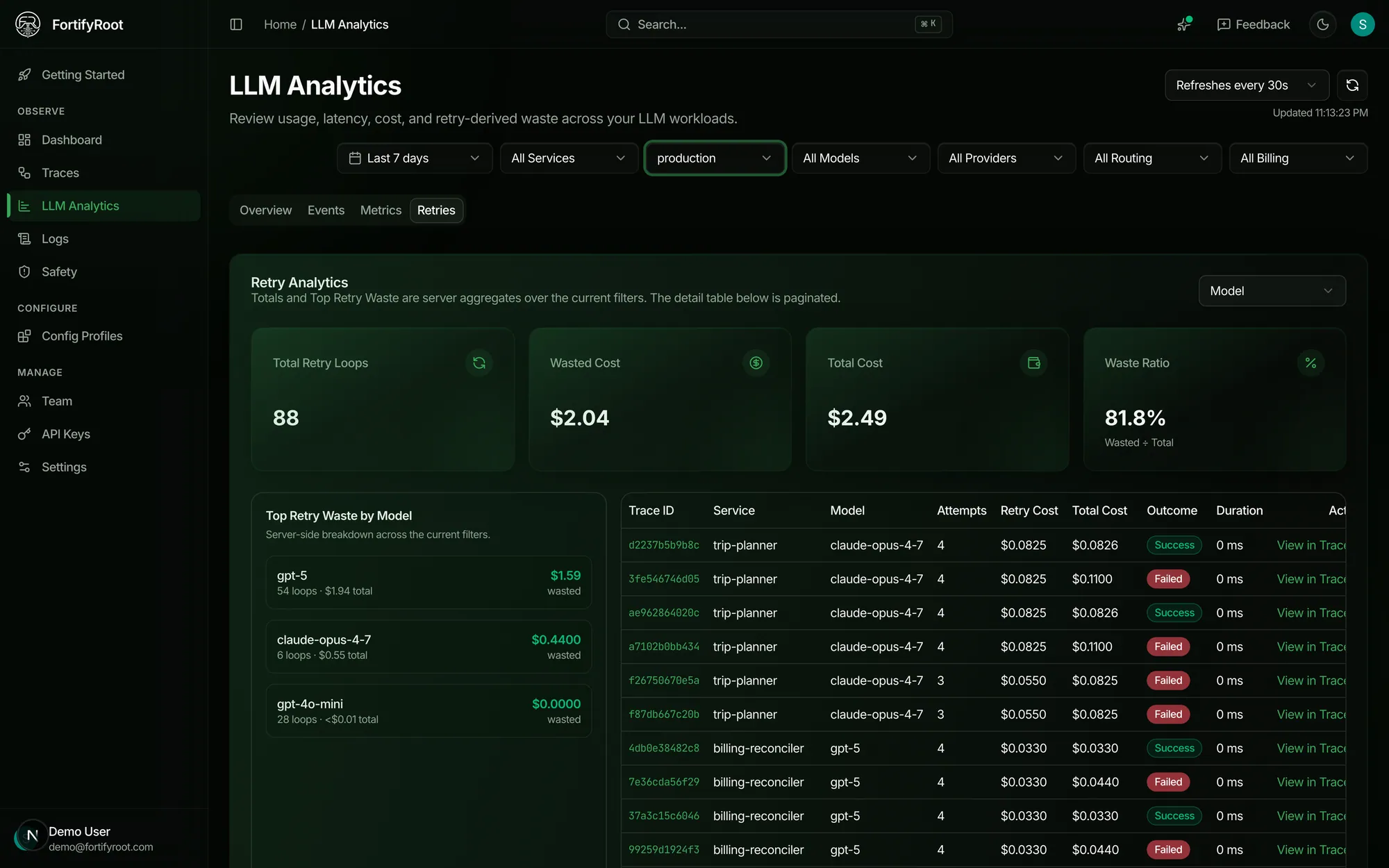
Retry waste, in dollars
Detected retry loops, total and failed attempts, wasted cost, and waste ratio, broken down by model, service, provider, and environment. Spend most tools never surface.
Instrument it in two lines
Initialize Ocelle once; keep calling your providers as normal.
import fortifyroot.ocelle as ocelle
from openai import OpenAI

# Before running: export FORTIFYROOT_API_KEY="fr_sk_..."
ocelle.init(app_name="my-llm-app")

# Provider-SDK retries are detected as one retry chain, so the wasted
# cost of failed attempts is attributed back to this call.
client = OpenAI(max_retries=5)
client.chat.completions.create(
    model="gpt-4o-mini",
    messages=[{"role": "user", "content": "..."}],
)
# Cost by model / provider / service + retry waste now appear in FortifyRoot
What you get
- Cost by model, provider, service, and environment
- Projected cost from observed telemetry
- Retry waste: total attempts, failed attempts, wasted cost, waste ratio
- Provider-role: raw, model, routing, and billing provider
- Spend traced to requests, agents, and retry loops
Make your GenAI predictable, safe, and auditable.
FortifyRoot is in early access. Request an invite, or get a free Cost & Safety Audit and we'll walk through it with you.